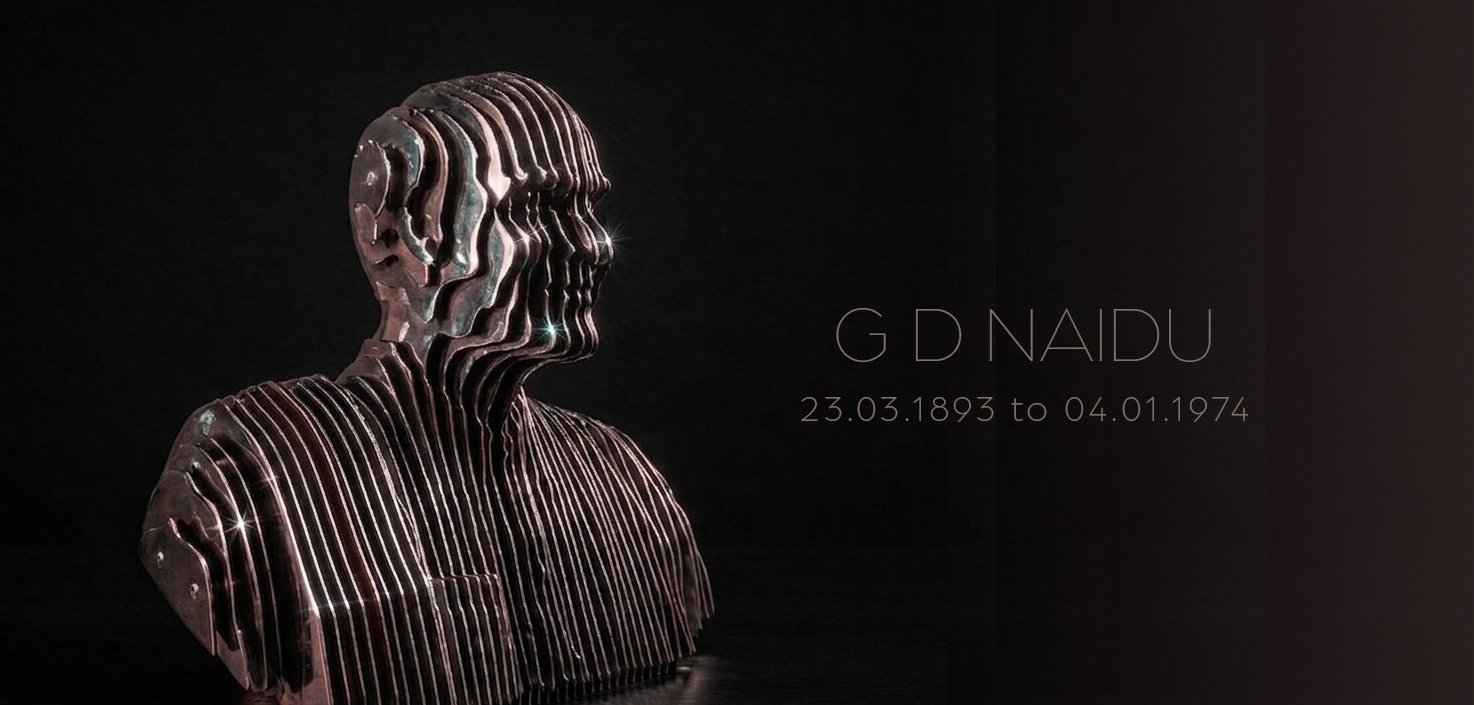
Two museums in Coimbatore prompted me to look beyond G.D. Naidu’s inventions and reflect on something more enduring: the culture of ingenuity that has shaped the city across generations.
A recent visit to the Mahatma Gandhi Memorial and GeeDee Museums in Coimbatore left me thinking about G.D. Naidu in a way I hadn’t before. Like many people, I knew him as an extraordinary inventor.
What I hadn’t fully appreciated was the breadth of his curiosity. Few fields escaped his attention. Industrial manufacturing, technical education, transport, agriculture and horticulture all engaged his attention.
Alongside them came an astonishing stream of products, from electric motors and automobiles to cameras and electric shavers. As often happens with people who are placed on pedestals, we remember the legend while gradually losing sight of the details that made them remarkable.
The more I learnt about G.D. Naidu, the less I found myself thinking about his inventions and the more I found myself thinking about the problems that seemed to preoccupy him.
He travelled widely and saw first-hand the industrial capabilities of Europe and America at a time when India lagged far behind. He was deeply engaged with the national movement and admired Mahatma Gandhi.
Much of his work seems animated by an aspiration for a more self-reliant India, one capable of designing,manufacturing and solving its own problems.
He was no reclusive genius either. He sought out conversations with industrialists, scientists, political leaders and thinkers, constantly exposing himself to new ideas. Looking across his life’s work, what stands out is not simply the number of inventions, but the range of problems he chose to tackle.
Beyond the products themselves, he helped make visible the idea that world-class ingenuity could emerge from Coimbatore.
That idea seems to have found expression in succeeding generations. Companies such as ELGI Equipments and Roots Industries showed that engineering excellence from Coimbatore could compete globally. The city’s wet grinder pioneers transformed hours of daily manual labour into the press of a switch, creating an industry that entered millions of homes.
The same ingenuity appeared elsewhere. S. Karivardhan proved that racing cars could be designed and built in India. Arunachalam Muruganantham approached menstrual hygiene not as an uncomfortable social issue but as an engineering challenge, developing affordable sanitary pad-making machines that improved the lives of millions.
Ganga Hospital demonstrates that a specialised institution from a tier-two city could set international benchmarks in orthopaedic care, research and education.
Different fields. Different generations. The same instinct to look at a problem and believe there had to be a better answer.
Today’s innovators have access to opportunities G.D. Naidu could scarcely have imagined: startup funding, prototyping labs, AI, digital modelling and instant access to the world’s knowledge. But tools alone don’t create breakthroughs. They begin with a problem that refuses to let go of someone.
G.D. Naidu seemed to discover those problems through curiosity and a deep engagement with the world around him. I sometimes wonder where today’s young innovators encounter the problems that become their life’s work.
Perhaps every generation defines ingenuity differently. G.D. Naidu’s generation helped build industrial capability. Later generations transformed manufacturing, healthcare and social enterprise.
Who, in your view, carries G.D. Naidu’s spirit today? And what are the defining problems they have chosen to solve?